
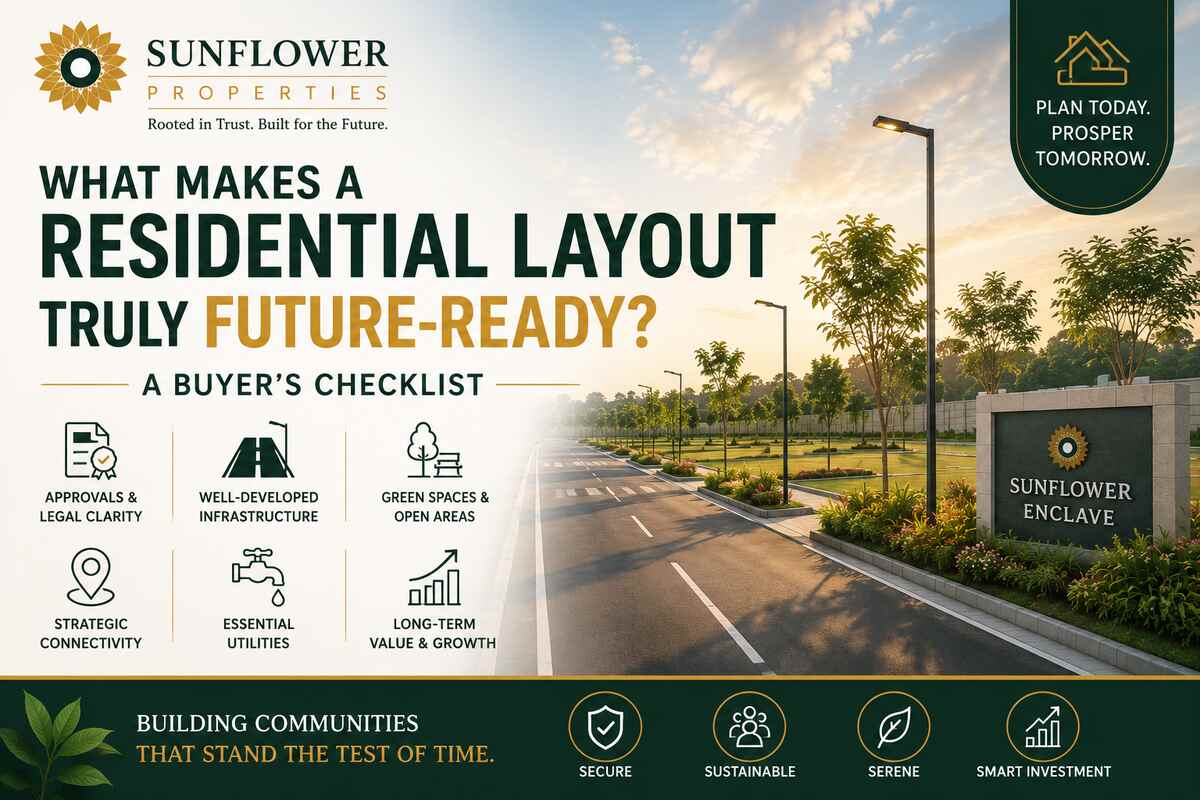
What Makes a Residential Layout Truly Future-Ready? A Buyer’s Checklist

Buying a plot is one of the most significant financial decisions most families make.
However, selecting the right plot is only one part of the decision-making process.
Equally important is evaluating the quality and long-term potential of the residential layout itself.
A well-planned residential development is more than roads and boundaries.
It reflects thoughtful planning, strong infrastructure, legal transparency and the ability to deliver value over decades.
As buyers become increasingly informed in 2026, expectations have shifted dramatically.
People no longer look at just location and pricing.
They want communities that offer:
✔ Better infrastructure
✔ Regulatory clarity
✔ Lifestyle amenities
✔ Sustainable planning
✔ Strong connectivity
✔ Future appreciation potential
✔ Peace of mind
This guide explores the essential factors that define a truly future-ready residential layout.
Quick Answer
What makes a residential layout future-ready?
A future-ready residential layout combines legal approvals, developed infrastructure, strategic connectivity, open spaces, utility readiness, environmental planning and long-term appreciation potential. Buyers should evaluate approval status, roads, drainage systems, power infrastructure, water availability and neighbourhood growth before investing.
Why Future-Ready Communities Matter More Than Ever
Homebuyers today are making decisions for the next twenty or thirty years.
They are not simply buying land.
They are investing in:
- their lifestyle
- their family’s future
- their financial security
- their long-term wealth
- Communities that are thoughtfully planned today are likely to retain their relevance and desirability in the future.
- Poorly planned developments often struggle with:
- water shortages
- congestion
- maintenance challenges
- documentation issues
- declining resale value
- On the other hand, premium residential layouts generally create stronger long-term confidence among buyers.
1. Approval Status Is The Foundation Of Buyer Confidence
One of the first things buyers should verify is whether the layout has received approvals from the appropriate authority.
Approved developments provide:
- greater legal transparency
- higher buyer confidence
- simpler financing options
- easier registration processes
- improved resale potential
Projects with proper approvals often indicate a higher level of planning and regulatory compliance.
Questions Buyers Should Ask
- Has the project been approved?
- Are all permissions available?
- Are documents ready for verification?
- Is the project registration-ready?
- Can approvals be independently verified?
2. Infrastructure Readiness Matters More Than Promises
Buyers today prefer to see progress rather than projections.
Visible infrastructure provides immediate assurance.
It demonstrates that the developer has already invested in creating a functioning residential environment.
A future-ready layout should ideally offer:
Infrastructure Checklist
✔ Internal Roads
✔ Drainage Systems
✔ Electrical Infrastructure
✔ Water Distribution
✔ Street Lighting
✔ Footpaths
✔ Boundary Planning
✔ Utility Networks
✔ Landscaped Areas
Infrastructure readiness significantly influences long-term value appreciation.
3. Connectivity Has Become A Major Investment Indicator
Connectivity plays a crucial role in determining the attractiveness of any residential community.
Modern buyers seek locations that provide access without compromising on tranquillity.
A strong residential location should provide access to:
- Schools
- Hospitals
- Business districts
- Commercial centres
- Public transportation
- Major arterial roads
- Ring Roads
- Future infrastructure corridors
Locations with better connectivity often witness stronger demand and higher appreciation.
4. Green Spaces Are No Longer Optional
The definition of luxury living is changing.
People increasingly value experiences over density.
Communities with thoughtfully designed landscapes tend to create more desirable living environments.
Green spaces contribute towards:
better air quality
healthier lifestyles
walkability
visual appeal
community interaction
children’s recreation
peaceful surroundings
The presence of landscaped areas also improves the overall identity of a development.
5. Utility Readiness Creates Long-Term Convenience
One of the biggest challenges residents face in many developments is inadequate utility planning.
Future-ready layouts should consider long-term operational efficiency.
Buyers should evaluate:
Utilities Checklist
Power infrastructure
Water availability
Stormwater systems
Drainage networks
Waste management planning
Underground services
Telecommunication readiness
Utility access directly impacts daily quality of life.
6. Layout Design Influences Livability
Good planning creates better communities.
Future-ready developments focus not only on plots but also on how residents interact with the space.
A well-designed residential layout should provide:
comfortable road widths
clear circulation
open areas
walkability
visual openness
organized streetscapes
functional zoning
Long-term livability often depends on these design decisions.
7. Appreciation Potential Should Always Be Considered
Buying a residential plot is often a long-term decision.
Apart from lifestyle benefits, buyers should assess whether the location has the potential to appreciate over time.
Factors influencing appreciation include:
infrastructure investments
connectivity improvements
planned developments
population growth
economic activity
residential demand
urban expansion
Future-ready communities often perform better because they anticipate evolving market expectations.
8. Developer Credibility Matters
Beyond infrastructure, buyers should also evaluate the credibility of the developer.
Questions worth asking include:
Has the developer delivered previous projects?
Is there transparency in communication?
Are timelines realistic?
Are approvals readily available?
Is documentation professionally maintained?
Trust remains one of the most valuable aspects of residential real estate.
9. Lifestyle Expectations Are Changing
Homebuyers today expect more than plots.
They seek communities that support a better quality of life.
Increasingly, buyers look for:
peaceful surroundings
nature-centric environments
clean streets
open landscapes
community identity
long-term ownership confidence
Future-ready developments recognise these changing preferences and integrate them into their planning philosophy.
The Residential Layout Checklist
Before investing, buyers can use this simple evaluation framework.
Future-Ready Layout Scorecard
Legal
- Approval Status
- Registration Readiness
- Documentation
Infrastructure
- Roads
- Street Lighting
- Drainage
- Water Systems
- Electrical Infrastructure
Lifestyle
- Landscaped Areas
- Green Spaces
- Open Environments
- Community Planning
Connectivity
- Road Access
- Schools Nearby
- Hospitals Nearby
- Commercial Accessibility
- Future Growth Corridors
Investment Potential
- Demand Outlook
- Appreciation Potential
- Location Strength
- Long-Term Relevance
Why Future-Ready Layouts Are Becoming The Preferred Choice
As cities continue expanding, residential communities that prioritise planning, infrastructure and sustainability are likely to outperform conventional developments.
Buyers increasingly prefer communities that provide certainty.
They want developments that already demonstrate progress.
They want locations that will remain relevant years from now.
Future-ready layouts represent an evolution in how people think about homeownership.
They offer more than land.
They offer confidence.
They offer convenience.
And most importantly, they offer long-term value.
Final Thoughts
Choosing a residential layout should never be based solely on pricing.
A lower price today may lead to compromises tomorrow.
Buyers should instead focus on developments that combine:
✔ Legal clarity
✔ Infrastructure readiness
✔ Strategic connectivity
✔ Green planning
✔ Lifestyle appeal
✔ Long-term growth potential
Because ultimately, a future-ready residential community is not simply about where you live.
It is about how you live for years to come.
Frequently Asked Questions
What is a future-ready residential layout?
A future-ready residential layout is a planned community designed with strong infrastructure, approvals, connectivity, green spaces and long-term growth potential.
Why is approval status important when buying a plot?
Approval status provides legal confidence, easier registration processes and often improves financing and resale opportunities.
What infrastructure should buyers look for in a residential layout?
Buyers should assess roads, street lighting, drainage systems, utilities, water supply and landscaping.
Does connectivity affect property appreciation?
Yes. Locations with strong connectivity generally attract higher demand and experience better long-term appreciation.
Why are green spaces important in residential communities?
Green spaces contribute towards better lifestyles, healthier environments, improved aesthetics and stronger community appeal.
Related Reading